Scaling The Design System for a Workforce Management SaaS Platform
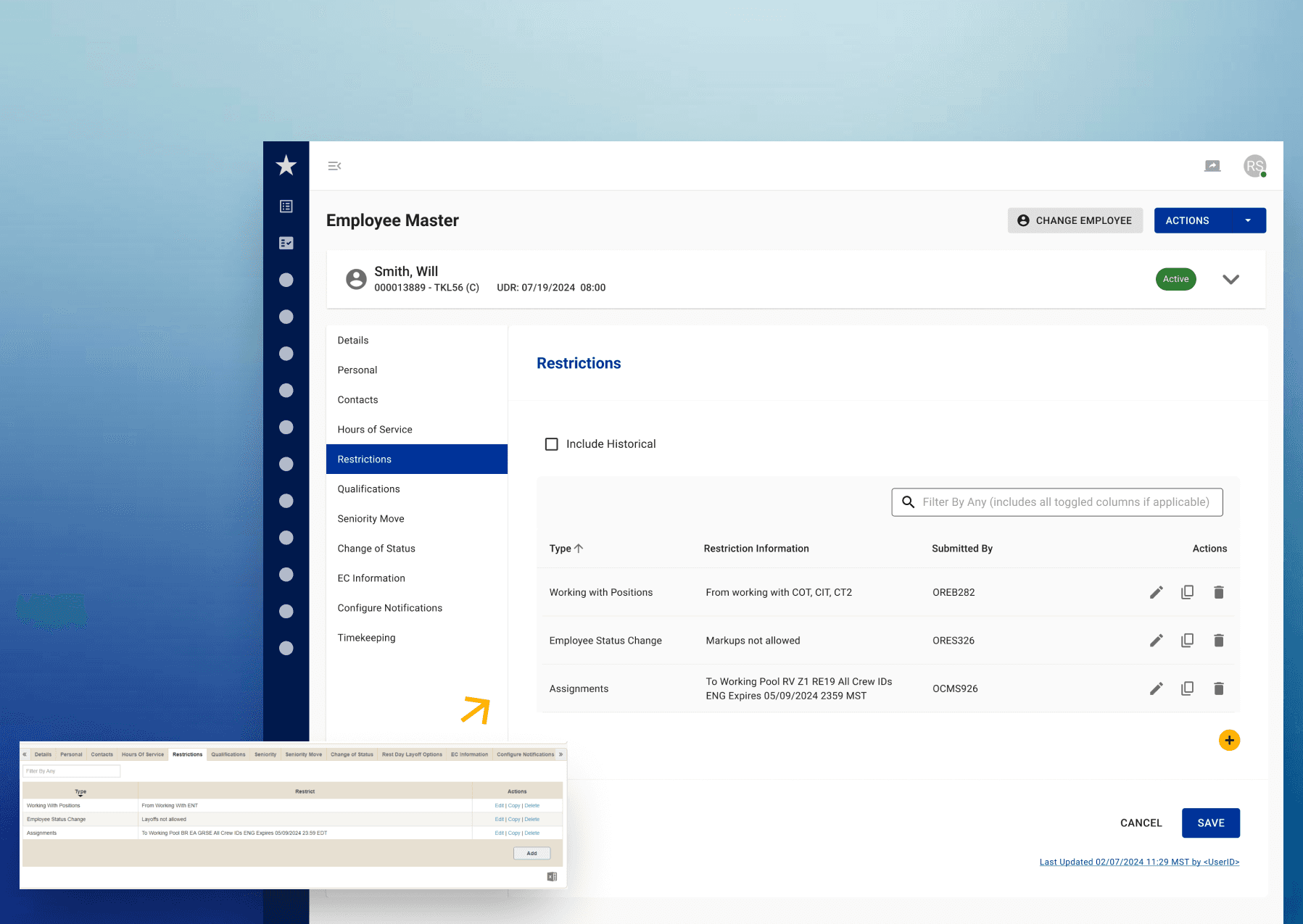
We're working on a project to redesign a legacy SaaS workforce management tool used in enterprise settings. A previous redesign of this tool by the client didn’t go as planned, so my team has been brought in to rebuild it for their clients which are some of biggest railroad companies in the world. Goal is to develop an MVP that minimizes costs while maximizing the use of existing code which brings in a bunch of constraints (fun, right?)
This tool is large and complex, with three main modules. The team initially adopted a MUI design system, which has scaled as we progressed. However, the tool’s complex screens have led to some design challenges hat I am primarily responsible for addressing. My role is to serve as a bridge between different teams like Project Managers, Product Owners, Dev & QA teams and various other stakeholders involved in the project.
Client
Tech Solutions for Railroad Companies
Type
Product Design
Year
2024
Process
Plan Together
Product Owners and PMs add design tasks in JIRA, setting priorities and goals for each sprint. We sync up to make sure we’re all aligned on what's feasible.
Research & Explore Ideas
We review available research, sketch initial ideas, and gather team feedback. If the design fits an existing design system template, we stay consistent. If not, we explore new solutions and work with devs to assess feasibility.
Design Development & Alignment
After finalizing a direction, we get alignment across teams, gather input, document updates in JIRA, and hand it off to devs. My role includes QA checks on developed screens and updating the design system to keep it scalable. I also ensure the two designers leading different modules stay consistent with components and assets.
Outcome
P.S- This is an ongoing effort
The anticipated outcome is a redesigned workforce management tool that provides a streamlined, user-friendly and scalable experience for enterprise railroad clients, optimizing existing code to reduce costs while leveraging a consistent, scalable MUI-based design system.

